
Recently my elder sister and began collecting the proverbs, phrases and sayings that were used in regular conversation in our childhood home. Both my parents had a huge reservoir of these nuggets which were sprinkled liberally in their conversations. Many of them were humorous, some outright funny and graphic, while others dispensed worldly wisdom, and provided practical guidance to live life by. Many left such a deep mark, that we can still recall them all these decades later.
More about these later.
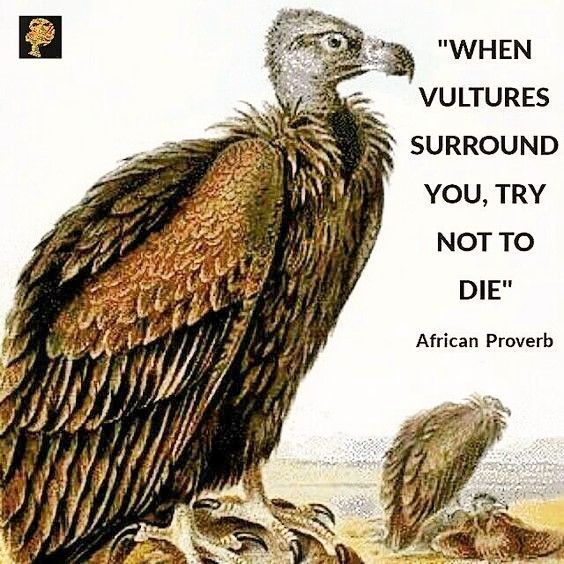
Proverbs hold the collective wisdom of a culture and its heritage. They are transmitted through the oral tradition, which is how ancient cultures of Africa, Europe and the East have a wealth of them. In traditional societies, these wise sayings and witty phrases are used as a matter of course during daily conversations. While not being preachy, they still impart morals, values and wisdom, often with a sense of humour and everyday happenings, specific to the community, people or culture. Most proverbs are layered, with a straight meaning and a metaphorical and deeper meaning. This makes them easy to remember and apply to life, first with the simple meaning and later learning the deeper meanings as one grows older.
Sayings on the other hand are pithy, commonsense phrases and idioms, that are often humorous and can even include proverbs. They are mostly specific to a region, community or even a family. They may not always offer moral or ethical lessons but are tinged in common sense with colourful descriptions of situations, feelings and human characteristics. Due to their personalised nature and often being graphic, they are memorable for their meaning and context, which is how my sister and I could come up with so many of them!
Ancient cultures of Africa, Asia and Europe, the Indigenous people of Australia and Native Indians of North America have a wealth of proverbs and sayings, reflecting their culture, environment and traditional values. Many of the sayings have been modified or adapted down the ages to reflect the changing times and realities. In Tamil we say call them pudu (new) mozhi (saying) as opposed to pazha (old) mozhi with the new sayings replacing archaic situations with new, often hi-tech terms and situations. Unfortunately, only old timers who can understand both versions can relate to them!
While on pudumozhis, there is one which is very apt for the times. There is this old saying, pallu pochunna sollu pochu, (பல்லு போச்சுன்னா சொல்லு போச்சு – lose your teeth and lose (clarity of) speech). The 21st century version is – Cell pochunna sol pochu (செல்’ போச்சுன்னா சொல் போச்சு – lose your cell and lose your speech)! There are many wordsmiths who are churning out these newisms at a prolific rate. It would require several posts to cover them all! But I can’t resist posting one of Raji, my friend’s impromptu ones. She is one of the above-mentioned wordsmiths, who comes up with such gems effortlessly. Vasadhi ullavanukku call taxi, vasadhi illadavanukku kaal than taxi (வசதி உள்ளவனுக்கு கால் taxi, வசதி இல்லாதவனுக்கு கால்தான் taxi – for one who can afford it, there is call taxi and one who can’t, his kaal (leg) is taxi).
Being value based, many proverbs find echo in various cultures and languages around the world. For instance, the English proverb ‘Pride goes before a fall’, has its Hindi equivalent in bade bol ka sar neecha (बड़े बोल का सिर नीचा), which loosely translates into ‘the one who is arrogant faces humiliation’. The same in Tamil is agandai azhivirku vazhi vagukkum (அகந்தை அழிவிற்கு வழி வகுக்கும்), meaning, pride leads to destruction. I found the Japanese equivalent that speaks of how ‘a haughty man must tumble down,’ and the Chinese one that says, ‘an arrogant army will surely be defeated.’ An African proverb says, ‘If you fill your head with pride, you will lack space for wisdom.’ Though not exact translations, all the above examples impart the same moral reflecting the cultural ethos of the people.
Given the emotional and cultural connect that growing up with proverbs and sayings in one’s own language provides, it is little wonder that psychologists use them to gauge the emotional responses and understanding of the deeper meaning of a simply worded proverb or saying. These can differ dramatically from one person to another and also evoke different responses and interpretations based on their current emotional and mental condition, and cognitive behaviour.
This is why efforts are being made to use them in positive psychological interventions, as opposed to clinical psychological therapy, which only looks at mental issues plaguing someone. Positive psychology works on the premise that a fulfilling life is not just the absence of problems in life, but requires the cultivation of positive emotions, building of strong relationships and finding community. Proverbs and sayings in one’s mother language are better understood and resonate with someone.
According to Richard Appiah a Ghanaian Positive Psychologist, ‘Across cultures, resilience, kindness and meaning have been woven into traditions for centuries.’ Nowhere is this more evident than in indigenous proverbs and sayings, says Appiah, harking back to his own Ghanaian roots. Hence, he strongly advocates using them as a tool in positive psychology, and in one’s own language as they have a healing effect, offering the comfort of one’s culture, home and community, and thus provide support to a person struggling with the vicissitudes of life. Read this interesting article by Richard Appiah for more insights.
Coming back to my own growing up years, I remember both my parents using dozens of sayings through the day. And they are all in Tamil, my mother tongue. Almost every conversation had one, some profound, others light and funny, many of their own creation. Questions elicited replies in some saying, often graphic and funny, advice and life lessons came in simple proverbs, and most admonishments came in sayings or proverbs!
When one of us ended up doing the same mistake we would be rebuked with, vethalam murunga maram eriduththu!’ (வேதாளம் முருங்கை மரம் ஏறிடுத்து) meaning, the ghost has gone up the drumstick tree. Remember Vikram and Vetal?
If someone lost their temper, father would intone, aathirakkaranukku buddhi mattu (ஆத்திரக்காரனுக்கு புத்தி மட்டு), meaning an angry person has little judgment. Granted, these sayings might not have hit the target at that time, but growing up with them did provide the right perspective and help in life.
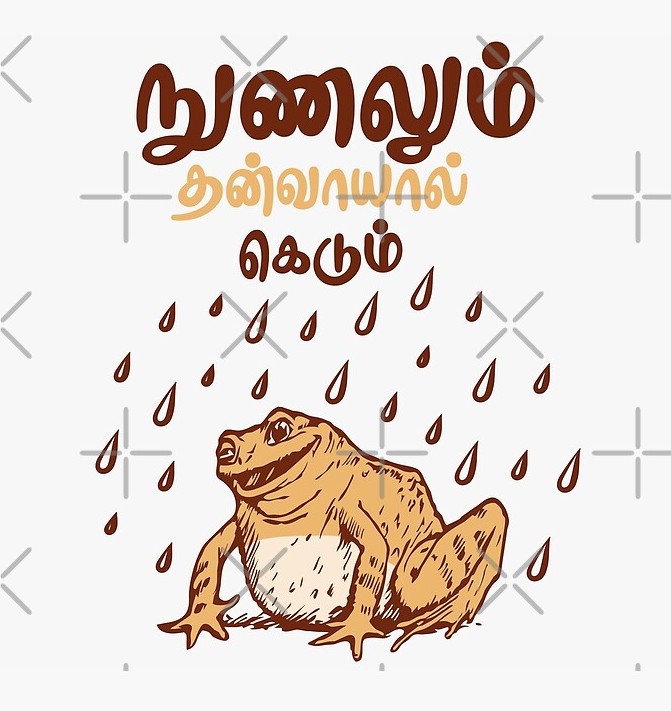
Recalling the effect of some of the sayings had on her, my sister shared her memories from adolescence.
‘The saying ‘aakka poruthavanukku aara porukkalai’(ஆக்க பொறுத்தவனுக்கு ஆற பொறுக்கலை – having waited patiently for the food to cook, don’t become impatient before it cools) taught me to be patient if my efforts did not bear fruit immediately. It gave me the patience to wait and taught me the power of prayer, because God always gave me a successful result,’ she says. Another was during her school final exam, for which she was appearing privately after a break of nearly six years from regular schooling. Feeling completely overwhelmed in the exam hall, she remembered one: ‘Azudalum pillaiyai aval thane peranum’, (அழுதாலும் பிள்ளை அவள் தானே பெறணும்? — No matter how much she cries, only she has to birth the child), which gave her the strength to begin writing, conquering her panic and going on to pass!
One of the proverbs that has served me well is about accepting one’s limitations. ‘Aattukku kaal alandu vaithirukkirathu’ (ஆட்டுக்கு வால் அளந்து தான் வெச்சிருக்கு — the length of a goat’s tail is restricted). This one has taught me not to push boundaries to unrealistic limits, and try to achieve the best I could within the means available. There are many more, but I guess this is enough proof for how these simple sayings provide guidance when needed.
And of course, I remember all the funny, silly and completely wacky, and usually the highly graphic ones — not missing a chance to use them when I can, mostly with the husband, for only he can relate to Tamil sayings as he recalls some from his childhood. He of course has his stock of Hindi kahawats which he uses freely.
It is a pity that in many a family, these have almost vanished from regular use. One reason could be that urban, upwardly mobile and upper-class families, and those who might have migrated to other countries converse in English or a mix of several languages — though that need not be a reason for not using them. With the closeness and familiarity of earlier days fast vanishing in families due to new-age parenting styles, parents are careful how they speak, so that they don’t offend even the children, leave alone other adults. And so, the use of old proverbs, irreverent idioms and phrases have almost completely vanished, making communication that much the poorer.
Of course, the ubiquitous English proverbs are still used in conversations, official communication and school essays, but it is not the same nor enough.
As we would say in Hindi, it is akin to oont ke munh mein jeera (ऊंट के मुंह में जीरा – cumin seeds in a camel’s mouth) or as we say in Tamil, yaanai pasikku sola pori (யானை பசிக்கு சோளப் பொரி (popcorn for a hungry elephant). Don’t miss the geographical equivalents – camels are to be found in the north and elephants in the south. Do begin compiling the proverbs and sayings in your language and try using them in your daily conversations. Believe me, it would make for very interesting interactions.
And with that, I conclude my case for using proverbs in regular conversations, and that too in one’s mother tongue!
Images: Homepage- https://quotescover.com/ Top- https://graciousquotes.com/ Bottom- https://bestouanov.click/





 The Cybernag
Good one. Today evening I was discussing on the same topic with my friend. This conversation went for almost 1 and half hours.
All best,
Sumit SINGH sumittsingh@gmail.com
LikeLike
Right you are! Why don’t you start collecting the ones you know and have also been using, though that need not be the criterion. Your family members and friends could collaborate and make a list of them — and then begin using them regularly in our daily conversations!
LikeLike
Delightful! There are such treasures to be found in these old proverbs and sayings…as you underline, they’re rapidly becoming extinct. I recall Jaya scolding us as kids for messing up the kitchen counter or dining table with one pithy and graphic saying, of which I only recall this: it translated loosely to “this place looks as messy as a place where an erumai maadu has delivered a kutti”!! Is there a strong case for compiling a collection of such sayings….? Mani
LikeLike
Ha ha. So like Jaya to use that one! Erumai kutti potta pola, is the right expression. It had always made me want to go see an erumai birthing. I also wondered if a cow did a cleaner job!
Translation robs these gems of the graphics and punch. They sound so tame. That is why I have argued in favour of mother tongue while using proverbs and sayings. I feel it is already too late to revive them in daily conversations. At least we should try to preserve our families’ special and unique sayings before we completely lose them. Better, we should try to use them — that is, those of us who still remember them. So yes, there is a strong case for compiling them. Start now!
LikeLike
Delightful!
LikeLike
Thank you Mani!
LikeLike
Very nice article. Raji our school colleague is there in the article. Mast mast mast……. 🙏👌🌹
LikeLike
I have been asking her to compile her Rajiisms for ages and she finally did some of them. So quote karna banta hai na?
LikeLiked by 1 person