
Arudra Darisanam is another auspicious festival that falls during Dhanurmas. For those who do not know what this festival signifies, it is the celebration of Lord Shiva in His manifestation as Nataraja, the performer of the cosmic tandavam. It falls on Tiruvadhirai which is Shiva’s nakshatram — also known as Ardra, Tiruvaatirai and Tiruvaatira in Sanskrit, Tamil, and Malayalam respectively. In 2023, there were two Arudra Darisanams — on Jan 6 and December 27. As a result, the festival skipped 2024. It falls on January 13 this year, the same day as the festival of Bhogi.

The festival is celebrated as Arudra Darisanam in Tamil Nadu and Tiruvaatira in Kerala. ‘Arudra’ signifies the golden red flame that personifies Lord Shiva. The Darshan happens early in the morning, as Tamil and Malayalee devotees in thousands throng Shiva temples across the country and globe. The most important and suspicious sthalam for Arudra Darisanam is Chidambaram, which is considered the heart of the world.
The pujas start at sundown the day before itself in all major Shiva temples, followed by night-long abhishekam, culminating in Arudra Darshan in the wee hours of the next morning.
At homes and temples, Shiva puja is done early in the morning, with chanting of Shiva stotras, singing of devotional songs, abhishekam and archanas. The special naivedyam offered to the Lord on this day is called KaLi (porridge), which is made of roasted rice powder and jaggery. In many families there is an accompanying dish of kootu made of seven seasonal vegetables. Though this is usually made during Pongal festival, it is also made for Arudra Darisanam. (For recipe of the kootu, see here).

This kaLi naivedyam has a special significance and beautiful legend behind it involving an ardent Shiva devotee called Sendan who lived in Chidambaram. Though he was very poor, it was his custom to offer food to any Sivanadiyar (Sevak of Shiva) who came to his door. One morning, when a hungry Sivanadiyar came to his house, Sendan didn’t have proper food to offer him. So, he made a kaLi with some rice powder and jaggery. The Sivanadiyar was very content with the food and blessed him.
He did not know it, but it was Shiva himself who had come to his house as a Sivanadiyar to test his devotion. The Lord was so pleased that He wanted the world to know about His beloved bhakta’s greatness. The next morning, when the doors of the sanctum of the Chidambaram temple were opened, the priests found bits of kaLi scattered on the floor, with some of it sticking to the face of the Lord as well. While they were wondering how anyone could have come into the locked sanctum to make the offering, a celestial voice told them of Sendan and his kaLi he had offered Him the previous day. Incidentally, it was the day of Tiruvadhirai nakshatram. The Voice also told them that thenceforth, on the day of Tiruvadhirai in Dhanurmas they should offer kaLi to Him as naivedyam. Sendan became Sendanar from that day onwards. (the ‘ar’ suffix in a name is a form of respect in Tamil).
The day also marks when Nataraja did the Ananda Tandavam in Chidambaram for his ardent devotees the sages Vyagrapada and Patanjali.
Lord Shiva is the Supreme Consciousness without a beginning and an end, omniscient in all Creation, including you and me. As such, we are at once the worshippers of Shiva and are Shiva Himself (shivoham). He has thousands of attributes and manifestations, and therefore has many names.
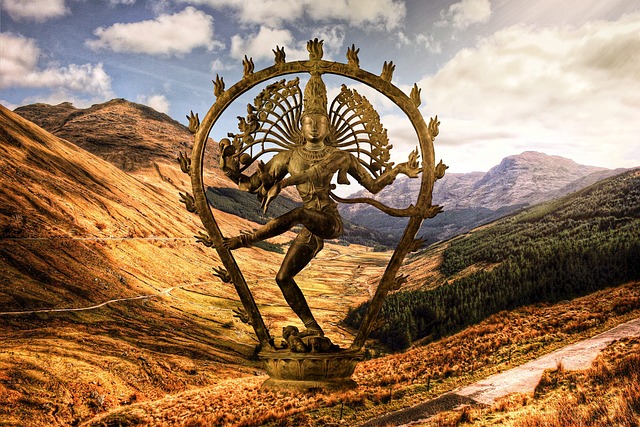
He is the ecstatic cosmic dancer Nataraja; He is the other half of Shakti – Ardhanareeswara; He is the divine healer Vaidyanatha; He is Pashupati — the protector of all living beings; He is Dakshinamurty, the Divine Teacher who teaches through silence; He is Bhootanatha — the Lord of the Elements…The attributes and names of Lord Shiva are beyond my tiny intellect and so I will stop here!
While the five letters of the Shiva mantra नम शिवाय, represent the five elements (पञ्चभूत) — Air, Water, Fire, Earth and Ether — the Cosmic Dance of Lord Nataraja represents the five principal manifestations of eternal energy namely, Srishti (creation), Sthiti (preservation, support), Samhara (destruction, evolution) Tirobhava (illusion), Anugraha (liberation, grace) signifying the entire life cycle.
The icon itself is full of symbolic significance. For instance, the figure under Nataraja’s foot is that of Apasmara Purusha (Muyalakan in Tamil), who symbolises ignorance and maya. By stamping on the figure, the Lord releases us from spiritual ignorance and illusion (Tirobhava).
For detailed description of the symbolism of Nataraja see this link.
Nataraja’s tandavam is classified into two forms: Tandavam and Lasya – Shiva and Shakti. The former is vigorous representing power and destruction, while the latter represents is gentle, representing Creation. They are both aspects of Shiva (He is Ardhanareeswara), for he destroys only to create and build again, in a continuous cosmic cycle. The very image is so dynamic and blissful, representing vigorous motion. The flying locks, the flickering flame in his hand, the ornaments askew, and yet the visage at once of calm and bliss.
Though Nataraja is commonly believed to be a Tamil Deity, archaeological excavations have found different forms of Nataraja in Madhya Pradesh and in the Himalayan regions some with two arms and others with eight, giving the lie to regional claims that Nataraja belongs to Tamil Nadu, though it was the Chola emperors who brought His iconography into prominence with their bronze creations of the Lord.
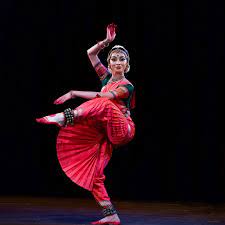
Shiva is known as a lover of music and dance – He is called Samapriya and Swaramaya, being a great musician and of course, dancer! And the form of Nataraja symbolises this aspect so well. Music and dance are part of pujas offered to Him along with other offerings. In Tamil, Shiva is called koothan, meaning dancer (Nataraja), and Sabesan – master of the stage.
The Nataraja manifestation also symbolises art and culture. No Bharata Natyam performance is complete without Nataraja adorning the stage, with puja being offered before the start of the performance. The Nataraja pose is one of the most common ones employed by performers. There are so many Tamil devotional songs in praise of Nataraja. The entrance of Bharat Mandapam at the recently concluded G20 Summit in New Delhi had the largest Nataraja murti in the world, as a symbol of cosmic energy, art and creativity, and power.

According to Tamil literary sources, Nataraja has performed his Tandavam for the benefit of devotees on different occasions in five temples which are also called the five ambalams or sabhas. Thesesignify five metals/elements of which the stages were made. The various forms of tandavams Nataraja performed were: Ananda Tandavam at Chidambaram (Pon Ambalam — Gold), Sandhya Tandavam at Madurai (Velli Ambalam – Silver), Urdhva Tandavam at Thiruvilankadu (Rathina Ambalam – Ruby), Tiru Tandavam at Tirunelveli (Thamira Sabhai – Copper) and Tripura Tandavam at Kutralam (Chithira Sabhai – Art). {For more details on the sabhas read here and here}.

Of these, two stand out — the Urdhva Tandavam took place when Shiva and Kali had a contest to determine who the better dancer was. The contest was even and there was no winner for ages. Then one of Shiva’s kundalams (earring) fell off, and he lifted it up with his foot and placed it back in his ear. Unable to match this movement, Kali conceded defeat.
Likewise, there is another interesting legend connected with Rajasekhara Pandian the king of Madurai, and one of the greatest devotees of Shiva. You would have seen Nataraja always with the left leg raised, resting His weight on the right one. The King, while watching the Lord doing his tandavam requests Him to rest his left leg, concerned that the Lord would be tired dancing on one foot. To please His devotee, Nataraja changed His foot as he danced, and so, in the Meenakshi Temple in Madurai, we see the Nataraja murti with His right leg raised.

Among all deities, Shiva embodies free spirit and therefore is limitless. The form of Nataraja exemplifies this attribute of the Lord. Though He is formless, if the devotee needs a form to worship, there is the exuberant image of Lord Nataraja to lift one’s spirits and provide divine ecstasy! He teaches that even while living in the world, one should learn renunciation, as detachment is the only way to attain true happiness and liberation of the mind. Let us remember this vital message while looking at Nataraja and celebrate Tiruvadhirai today.
Images: Top: https://tamil.oneindia.com/, Madurai: https://www.tumblr.com/,
Dancer: https://www.pinterest.com/, G20: https://www.youtube.com/ Homepage: https://pixabay.com/





 The Cybernag
What vast knowledge you have. Really to pen down all this first you have to go through so many granths etc. My sincere wishes and please do keep it up.
LikeLike
Thanks Rameshwar. It is true that I have to cross check the details to be as accurate to the legends as possible, but most of the material is inspired by my personal experiences and knowledge gained from elders.
LikeLike
[…] many vrats and festivals fall during Dhanurmasa, the crown jewels are Vaikuntha Ekadashi and Arudra Darisanam, the former dedicated to Vishnu and the latter to […]
LikeLike
Brilliant & enlightening. You have made me more proud of Sanatan Dharma’s spiritualism!
LikeLike
Thank you Rajendra. I am making this a kind of series where our cultural roots are explored with all the legends, traditions and spirituality associated with them. It is a learning odyssey for me too. Thank you for joining in!
LikeLike
What a treasure trove of information! Never knew so much before. Loved reading it and have also shared it with my parents. Thank you.
LikeLike
Thank you Gomati. I realised that this is a very very vast and deep topic and no matter how much I researched and wrote, it will seem inadequate. So went ahead and published it!
LikeLiked by 1 person