

I had written this post some years ago to introduce my readers to the various religious celebrations in the different regions of the country. But since the decibels against Hindu festivals only seems to be growing in volume, I feel it is worth updating it with a new title every few years! This post is not exhaustive by any means and I have not covered the ‘secular’ topics of sweets, crackers and lamps, as enough has been written and being written about them across cyberspace. I have provided some links for more information about the various festivals connected with Deepavali.
Deepavali/Diwali is about joy, light and sweets – and crackers. But it is primarily a series of festivals comprising of many dharmic rituals and celebrations spanning several days, if not weeks, preceding and succeeding Deepavali day. Unfortunately today, there seems to be a concerted attack on Hindu festivals on various pretexts with this beautiful festival with its colourful puranic and itihaasic connections and spiritual connotations, being reduced to heated discussions of crackers and pollution, and other perceived ills it supposedly spawns. There seems to be a sustained propaganda to establish it as a ‘secular’ festival with even a secular name being coined for it — Jashn-e-roshni!
No, Deepavali is not a secular festival. Period.
The first and most significant thing I want to stress here about Hindu festivals is that they never mourn any event as the Abrahamic religions do. Our festivals celebrate the victory of dharma over adharma or mark a joyous event in our religious calendar or celebrate the jayantis of our Deities and saints with feasting, singing and dancing. They also encourage introspection for inner cleansing, which is aided by fasting and satsang.
For instance, we don’t mourn the exile of Rama but celebrate His return to Ayodhya. Likewise, we celebrate Krishna’s birth and His various leelas, but not His departure from the world. Hindus consider these events as part of human life, which apply even to Avatars when they take human forms.
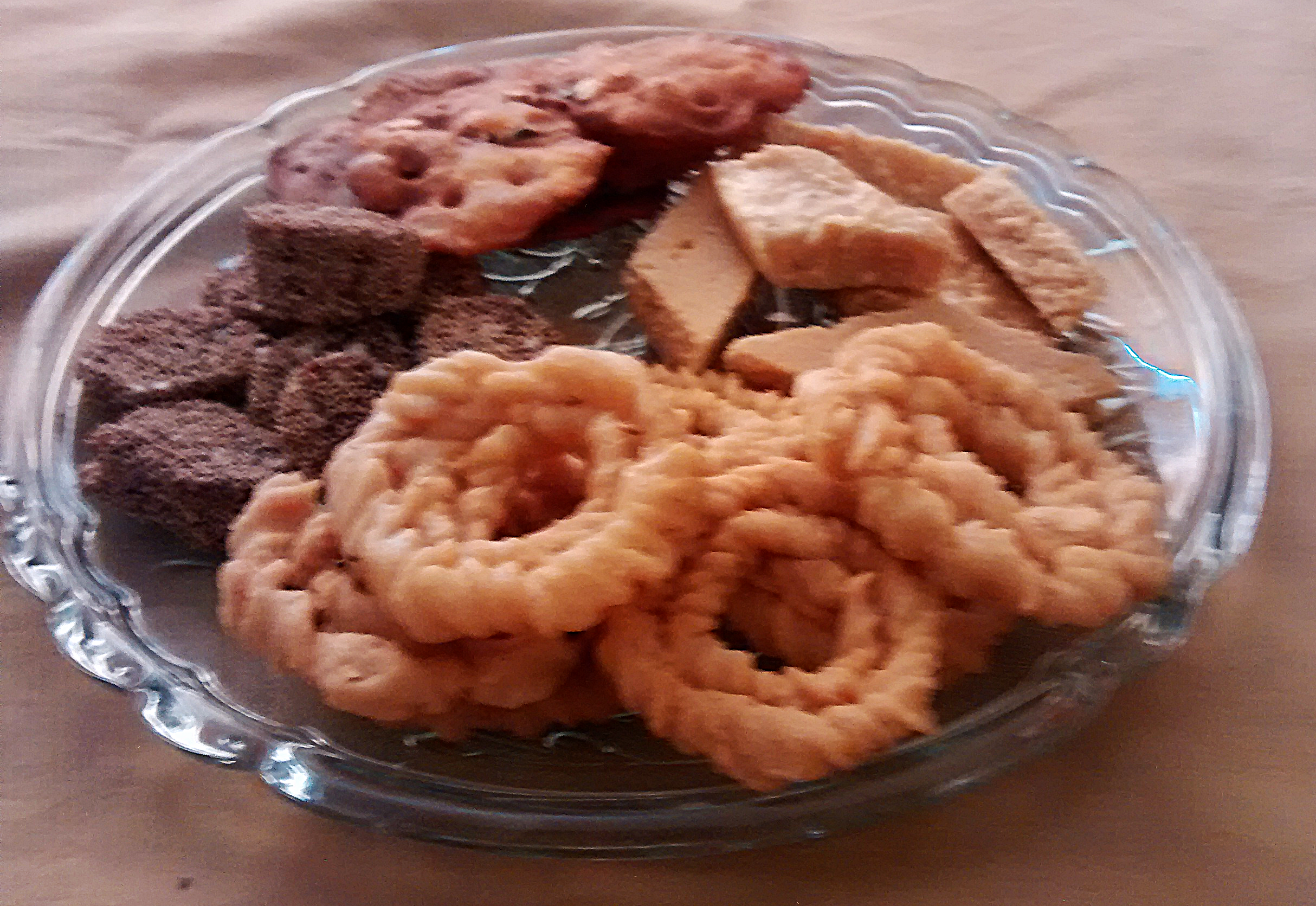
For those who are not aware, let me tell you that #Deepavali is….
- the worship of Goddess Lakshmi. Trader communities start their new year by opening new account books on Deepavali.
- the celebration of the return of Lord Rama to Ayodhya from his exile after 14 years.
- the celebration of the killing of Naraskasura by Sri Krishna/Ma Kali.
- the day of liberation for Sikhs — Bandi Chor Divas — when Guru Gobind Singhji and the 52 princes with him were released from prison by Jahangir.
- the day Lord Mahavira attained nirvana. Jains celebrate it as Deva Diwali.
Deepavali is celebrated over five days in most parts of the country. In some places including Madhya Pradesh and Uttar Pradesh, the festivities go on till the full moon following Deepavali, with Bhishma Panchak, Chhat Puja and Tulsi Vivah being among other festivals falling in between, culminating in Dev Deepavali. It is also known as Dev uthani/PrabodhiniEkadashi/Devothhan Ekadashi or the day when the Gods wake up. Dev Deepavali is celebrated grandly in Varanasi as Ganga Mahotsav. This year, Ayodhya is also going to witness a grand celebration of this festival.

In some parts of Gujarat and Maharashtra, the festival begins three days before Diwali, that is on Dwadashi, the 12th day of the waning moon. It is celebrated as Govatsa Dwadashi, with cows and calves being worshipped.
Dhanteras/Dhan Trayodasi/Dhanvantari Jayanti/Asweyuja Bahula Thrayodasi/ comes next and is celebrated all over India under various names given above. It is believed that if one buys gold or some household item on this day, prosperity will follow all year round. Tamilians offer prayers and puja to Lakshmi and Kubera on this day. Lakshmi is the goddess of wealth and Kubera is her celestial treasurer.
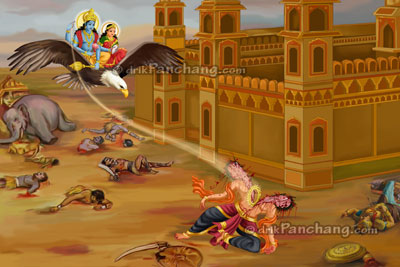
Naraka Chaturdashi is variously known as Kali Chaudas, Choti Diwali, Roop Chaturdashi or Roop Chaudas. It is the main festival of Deepavali in the southern states including Maharashtra. Naraka Chaturdashi is the celebration of the killing of Narakasura by Lord Krishna and his consort Satyabhama. Bengalis believe that it was Goddess Kali who slew Narakasura.
(Hindu legends sometimes have different versions, but observers are perfectly comfortable with the multiculturalism and plurality of their Dharma).
South Indians get up well before dawn on Naraka Chaturdashi and apply sesame oil to their heads and bodies before having a bath. This is symbolic because Goddess Lakshmi is believed to be present in sesame oil. Likewise, all water on the day of Deepavali is considered to be the waters of Ganga. This signifies spiritual cleansing of the mind as well as physical cleansing of the body. Even today it is customary for Tamilians greet each other by asking, ‘Ganga snanam aaccha?’ (Have you had Ganga snan (bath)?) Taking the blessings of elders not just in the family, but also in the neighbourhood, is also part of the celebrations.

Maharashtrians celebrate the killing of Narakasura by symbolically crushing a small bitter vegetable called Kareet under their foot. This act also signifies the expunging of bitterness from inside us to begin life anew.
Didn’t I say that our festivals are replete with symbolism? How beautiful they are if only we took the time and effort to learn about them!
The new moon day is when Lakshmi is worshipped in homes and businesses. For many, this is the biggest festival of them all, the Badi Diwali. Even those who don’t celebrate other festivals go the whole hog with Lakshmi Pujan, which begins with the cleaning of the entire house.
The day after Deepavali – the first day after a new moon – is celebrated as Govardhan Puja or Annakoot in the north – the day when Lord Krishna lifted the Govardhan mountain to save the people of Dwarka from the deluge that threatened to drown it and also fed everyone. (Annakoot, literally means a mountain of food). The day is also observed as Bali Pratipada or Bali Padyami in Karnataka, where it is believed that king Bali comes to visit his subjects from Patal Lok, where he has been pushed by Sri Mahavishnu in his Vamana Avatar.

The second day is Bhai dooj or Bhaiyya dooj or Bhau Beej – as it is variously called. It is the day that sisters fete their brothers as they do during Rakshabandhan.
And then there is the Chhath Puja, which is celebrated on the sixth day from Deepavali. It is celebrated in Bihar and parts of Uttar Pradesh and Nepal in a grand manner, but in recent years it has become a pan-Indian celebration with devotees offering prayers on riverbanks to the Sun God Surya and his celestial wife Usha.

Thus, all the days following have various religious significance till the full moon day when Dev Diwali is celebrated as the culmination to the festivities. In addition to being the day when the Devas wake up, it is also celebrated as Tripurari Purnima as Lord Shiva had killed Tripurasura on this day.
My niece Gayathri, who lives in Arizona had added a beautiful note on her FB wall, which I have included in the post, as it adds so much value to it. Quoting her:
Living far away from the homeland, we see our traditions being watered down to simplistic phrases in order to make it easier to understand for our children, neighbors and friends of other faiths and cultures.
The true way of celebrating many Hindu festivals include the following: spiritual growth, advancement of society and respect for nature. The festivals always include ceremonies that respect and honor a particular profession or trade like the farmers (Pongal/Baisakhi), the craftsmen (Dusshera/Golu), the tradesmen, machines and workers (Ayudha Puja) to name a few.
These festivals help the people practicing their profession by giving them a boost to their economic situation and they may depend on the income from these festivals for their sustenance throughout the year. By finding a balanced approach to the festivals – giving priority to spiritual growth while understanding that these celebrations have a positive economic impact on the various strata of society and respect nature while adhering to these traditions, we will see the true intent shine through and help our children understand the complete sentiment of these festivals.
My wishes and prayers for the Deepavali festival to usher in spiritual awareness, wisdom to understand and grow ourselves intellectually and spiritually, prosperity that allows us to share more with those that don’t have it, and the joy of advancing the teachings of Sanatana Dharma.
Also, as Gayathri points out, trades and artisans’ lives are linked to seasonal festivals. By taking all these away and reducing it to just a ‘festival of lights’ to curtail its significance and secularize it, is the greatest injustice to all the observers of the festival in its various facets. Do read the very articulate and excellent piece on this topic by Beloo here.
It is quite evident that our ancient culture and civilization are inextricably entwined with Diwali/Deepavali which is the biggest festival for Hindus. Far from not being a religious festival, it is deeply rooted in it.
Change traditions to suit the times by all means; chuck them if you don’t want to observe them. But hold your peace at least till you understand their significance and symbolism. Above all, don’t convert such a culturally and spiritually rich festival with deep dharmic significance into a commercial and ‘secular’ festival of lights.
On that note, let me wish you all a very Happy Diwali/Deepavali! May our inner darkness be destroyed forever!
Pics courtesy:
Dev Diwali : femina.in
Homepage :https://pride.kindness.sg/ This page top: https://www.indiatoday.in/
Govatsa Dwadashi : AstroSage Magazine Govardhan Puja: https://www.ritiriwaz.com/





 The Cybernag
The title of your blog is somewhat misleading. There is no doubt that Diwali is traditionally a Hindu festival that holds religious significance for the Hindus and we all have fond memories of the festivals and it continues to thrive globally as the festival that is identified with Indian community. I believe that over time Diwali celebration have taken on a secular and multicultural character, embodying the spirit of shared joy and festivities that go beyond religious boundaries. Do we not see Diwali gifts being exchanged with and by people from all faiths and backgrounds including people who do not believe in any religion. Isn’t this a good development which needs to be celebrated? Why should we worry if someone calls this a secular festival?
LikeLike
I agree that Deepavali is being associated with Indians and that it is a festival of shared joy and that is a good thing. What I object to is that it is slowly being shorn of its dharmic roots in an effort to commercialise and take away its cultural and religious significance. It is not just someone calling it a secular festival. I wouldn’t be so riled up had it been so, but I most certainly object to sullen models showcasing Deepavali merchandise or sporting black dresses as Deepavali apparel! Perhaps they are targeting a different faction that does not celebrate Deepavali?
All our festivals are joyous occasions with shared festivities if the other communities find it in their hearts to do it. You’d have seen SRK and Salman Khan bringing home Ganapati every year. They respect the religious significance and even join in the arti. While our secular hearts are thrilled to see a Deepavali mubarak, can you imagine what response an ‘Id ki shubhkamnayein’ would get?
You have mentioned exchanging of gifts. Well, the commercial world is doing to Deepavali what it did to Christmas over the decades, with just gifts and fun, which rake in the moolah. How many go to church on Christmas eve? I wanted to tell the younger generation that there is more to Deepavali than just lights and that it has more significance in various regions than being just a ‘festival of lights’, which of course it is. The stories and legends need to be told. And so my original title of ‘Has Deepavali become globalised?’ when it was published some years ago, has been changed to this one. I am sorry if I have offended you in any way with my post, Nattu!
LikeLike
The classification of Diwali as a religious or secular festival depends on an individual’s perspectives, cultural practices, and the emphasis placed on its religious or cultural dimensions. Yours perspective seems to emphasise the religious part. There can be another which emphasises the cultural part. Your blog also brings out the festival’s multifaceted nature and differences across states. This allows for various interpretations and celebrations which in turn helps it evolve in various ways. Without doubt Diwali is the most popular festival in a large country like India and we have to accept the increased economic activity which is bound to follow its popularity.
LikeLike
Do you realise we are both saying the same thing? I have not only mentioned the religious part but also its cultural connotations. My niece has added some valuable insights too in this regard. In the end, all cultural traditions have their roots in the dharma we practice, aren’t they? The torans, garlands, rangolis, kilas (remember those magnificient ones from our childhood?), the bakshanams that our mothers and aunts made for naivedyam…
When we take away these from any festival, what remains is exchanging gifts, wearing designer clothes and jewellery and have parties. If we keep doing it, the original intent of a festival is lost. Homogenisation is the death of unique cultural and traditional practices and customs, as my friend Mani has pointed out.
I think you should read more of my posts in the categories of culture and spirituality to get my perspective on these, which are quite inclusive and positive 🙂
Wish you, Leela and the kids a very happy Deepavali!
LikeLike
I missed out on a few of your blogs and will catch up. Thanks to Rajendra for posting the link of this blog which helped me come back and read.
Since the blog has been written after a lot of research, I am curious to know what you found about the celebration (or the lack of it) in Kerala.
LikeLike
Hey Nattu, that is a wonderful suggestion — I mean covering other states and their way of celebrating Deepavali. And no, this post is not as well-researched as I normally do, mainly because the idea is to drive home the point that Deepavali is a festival that has more to it than just lamps and crackers and of course, sweets! As I have mentioned in the post, I keep updating and revising it periodically, so I will take up your suggestion in a subsequent revision.
LikeLike
You always do justice to the topic you take up. But this is very timely and is so exauative that it should go to maximum people between age 10 to 35 years old. I will share with my children.
Please accept my sincere congratulations for the great work done.
Keep it up. 🙏💗🌹💯🚩
LikeLike
Brilliant. Yes Diwali and other Hindu festivals have scientific underpinnings and foster spiritual growth which is totally unknown to Abrahamic cults since they drag and hold people to mind level by forcing human beings to subscribe to faulty belief systems. Diwali & other Hindu festivals also herald victory of good over bad. So, Diwali is just not a secular festival. Hindus cannot allow this lofty festival to be dragged down by librandoo abrahamists!
LikeLike
All our festivals have religious connotations and if one doesn’t want to accept that, then cease and desist! This is coming from an ex-secular and a fanatic one at that. While it is true that we have certain rituals and traditions, they are not rigid and can be customised to suit our circumstances and preferences with no dire consequences for doing it. All I am asking is not to junk them altogether in favour of secularising and destroying its very essence.
LikeLike
Brilliant, and timely too…with the most profound ideas and principles, the most exquisitely beautiful tales and visions captured in Deepavali and other Hindu festivals, are reduced by our incredibly ignorant and infantile marketing-advertising-media creatures to crass one-liners like “celebration of victory of good over evil”! Happy Deepavali to you too 🙂
LikeLike
Don’t forget the sullen models wearing BLACK outfits in Deepavali ads! perhaps they are mourning the death of Ravana or Narakasura 😀 I am an ex-secular, by the way. In my super-secular days I used to actually feel that we should downplay our enthusiasm and curb the celebrations lest we offend the other communities. It took a stint in a small town and interaction with tribals and rural masses to bring me down to earth with a thud and a crash and the realisation that we have a cultural and civilisational legacy that goes very very deep. Needless to say, it left a mark on me and my writing. Indians and especially Hindus cannot be defined by a severely restricted urban ethos. Do you agree?
LikeLiked by 1 person
Yes totally. I too was lucky – blessed – to have spent over two decades in tiny, remote Shillong among incredibly diverse tribals – all of whom were so proud of their own unique cultures (how hilarious that till today “mainstream” India groups them into an amorphous “Northeast”!) – and I learnt from them, and from my Irish teachers (more than even my Indian teachers) how to be integral, to be honest and comfortable with oneself and one’s own roots, to be MYSELF. It is this alone that can guard us English-educated ones from becoming craven, self loathing Macaulay-haunted frauds…
LikeLike
[…] certainly is not the only thing that marks this elaborate festival that lasts for several weeks.A version of this post was originally published on […]
LikeLike
Unfortunately the large majority of the present generation have no idea what the festival stands for. Most of the time some popular customs are followed blindly without any idea of its signifance. This is really sad because it means the following generation will have literally no clue of any of it. True knnowledge of tradition is dying a slow death.
LikeLike
That is why I wrote this post sweetie. I think I will have to go on adding more to it as I myself discover new festiviries and vrats connected with it! Bookmark my post won’t you, so that some day you can pass it on to your child/grandchild!!
LikeLiked by 1 person
A perfect illuminating post befitting the festival with nuggets of wisdom and knowledge! Thank you, Zephyr and festive greetings to you and family.
LikeLike
Another great, comprehensive piece by you, Zephyr! I loved this statement – “one should at least try to understand what one is rejecting, instead of just rejecting for the sake of rejecting or to ‘stand’ with this or that.” It sets up the whole purpose of your post right there in a succinct manner. It is sad that rejecting our traditions, our customs, our practices – the act of rejecting itself (or protesting itself) – somehow has come to be seen as progressive, cool, modern etc. In a truly progressive spirit some rejection must be there, but only when one has evaluated and understood what it is that is being rejected and why. Otherwise it has no meaning.
Thanks for writing this excellent piece and for linking my piece with it 🙂 Your niece’s words summarise well the sentiments of those living abroad and finding deeper solace in preserving their customs and practices, as a way to stay in touch with their Indian-ness. Glad you included these words here.
LikeLike
I feel that criticizing our culture blindly is like insulting our ancestors. Yes, bursting crackers will pollute…sound and smoke pollution, but we can reduce it to just sparklers. And how come oil diyas pollute? People who are doing it, do it to just write some negative news.
I didn’t know so many different ways of celebrating Deepawali. Thanks for the detailed write up about this beautiful, happy festival.
LikeLike
That’s exactly my grouse too, Sandhya! Criticizing something without first understand what they are cricising or [ulling down is really very stupid and smacks of a hearty dislike. Now there is a cry about diyas too! And yes. Negative news sells, so they create such news if there is none to be found
Thank you for the kind words 🙂 I wanted to acquaint myself too with the various celebrations and so this post was born.
LikeLike
Wonderful and well researched! You have captured the cultural and mythological aspects very nicely.
LikeLike
Thank you Sridhar! So good to see you in my blog 🙂
LikeLike
Well researched and wonderfully written. I really miss the celebrations from our childhood days when it used to be all fun & laughter, getting together, greeting each other with joy, sitting with mother till late night and helping her make bhakshanams, getting up early morning, having an oil bath and wearing new clothes, eating sweets and of course a bit of crackers! Those days we used to get new clothes knlh for Deepavali so that increased happiness multi-fold! Rathef unfortunate that my children don’t enjoy like that!
LikeLike
Thank you Ravi. Simple joys and fun, right? And don’t forget the elders reminding us about how Krishna killed Narakasura and why we are celebrating the festival! Our children did enjoy those things at least when they were young, didn’t they now?
LikeLike
Happy Deepavali to you both.It is very exhaustive and covered the practices around the entire coutry.
More than a festival of lights, it has transformed over years into a festival of gifts especially in the Northern and Western parts of the country keeping the people happy and boosting the sales of business people.
LikeLike
Thanks KP! One of the reasons of secularising and globalising a festival is the commercial angle. Even Christmas has suffered that fate. But we here face a peculiar problem of the so called liberals going hammer and tongs at everything traditional or having religious roots as being harmful, regressive and what not. Before the coming generations forget or remain ignorant of all the various celebrations connected to Diwali, I thought I should make a compilation.
LikeLike
Happy Diwali. This post touches various aspects of the festival and the way it is celebrated by varioys cultures in India filled with knowledge and wisdom. Agree, Diwali has become too global where we tend to lose its essence with Indian across various countries spell the name differently. Sheer beautiful and explored in-depth.
LikeLike
Thank you Vishal! Hope you had a traditional Diwali!
LikeLiked by 1 person
I did 🙂
LikeLike
What a fabulously comprehensive post! Being from UP and having lived in Gujarat, Maharashtra, AP and now Karnataka, I’ve seen Diwali being celebrated with so much joy and in such different ways. Did you know that Gujaratis and in fact many Hindus celebrate next day of Diwali as New Year? I love Diwali and in my home mum would considering bursting a few crackers after evening pooja as shagun. They were a must after Lakshmi Pooja as well. Of course, not the obnoxious ladis and bombs but the beautiful sparklers, anaars and ground chakkars. I love to see the joy on the faces of my kids when they light there, and I would never want this to be done away. Let us not reduce these traditions to debates and taking sides. Let’s honour the sentiments of all and by all means spread awareness to burst fewer crackers every year. A very happy Diwali to all at home!
LikeLiked by 1 person
Thank you for your warm appreciation, Rachna! Love to see your comments always 🙂 I know that it is new year for some communities but have forgotten to mention it. Will add the line. In such a long post, what is another extra line, eh? 😀 I have included my niece’s FB note in my post too. Do check it out.
Barring those who want to show off their monetary might by burning those bombs and ladis, many many Indians – more than any media person would care to find out – have either given up crackers altogether or at least reduced them drastically. As my friend Rajendra pointed out, crackers are just a bead in the garland of festivities. Self regulation in such matters is slowly coming about. We must keep our traditions alive!
LikeLike
Crisp yet comprehensive, the article depicts sheer beauty and underlying spiritualism of Diwali vividly.
It’s clear that playing crackers is a bead in the string of festivities, and application of mind did not precede ban on crackers. At this rate some day even lighting will be banned for its environment impact!
It’s time Hindus learnt shed their nihilistic view of the most profound Vedantism.
LikeLike
Your remark about lighting Diyas has already come true. Read on Twitter a thread that talks of it being more polluting than even crackers! Thank you for reading, liking and sharing!
LikeLike