
In my previous post I had mentioned the concept of acceptance or uketamo (I accept), which is at the core of the Yamabushi experience. I was struck by the fact that the term uketamo far from being an apathetic and passive response, carries trust and implicit faith in the Master’s instructions, following them without any protest or question. I found it uncannily similar to the law of karma and how those who believe in its justice just do their karma and leave the outcome to God or the master as in the case of the Yamabushi. The only difference is that while the former is trust in the Supreme Power, the latter is trust in the temporal Master.
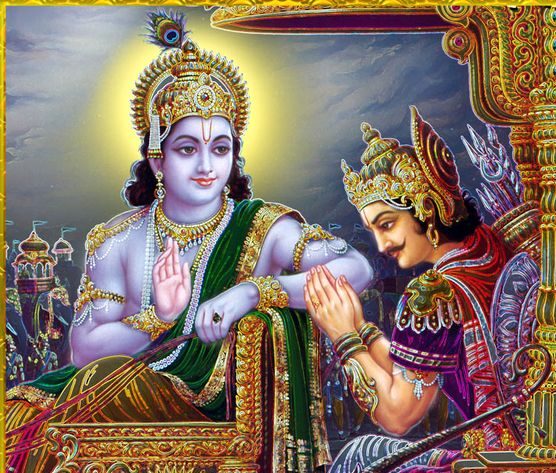
It is this total surrender that is misconstrued as passivity by those who do not understand the power of implicit faith and surrender.
Acceptance is as much at the core of Bhagavad Gita, as are doing one’s duty, having faith and surrender in Divine guidance. Nowhere does Krishna ask us to sit passively, waiting for things to happen to us. It is a complete counselling session asking us to engage in action and do what needs to be done – acceptance at its best.
Taoism and Buddhism advocate this concept too in different ways. Another ancient philosophy — Stoicism — founded by Zeno of Citium (Cyprus) influenced by ancient Greek thought, long before Christianity came on the scene, advocated a similar practical, pragmatic, and positive way to live one’s life. The word stoic, was derived from Stoa Poikile (painted colonnade), where Zeno held his lectures. In modern usage, Stoicism refers to a person who is indifferent to both pleasure/joy, and sorrow/pain as he accepts the circumstances causing them, and flows with life. This is accomplished with mindfulness practices and value-based living. Stoicism envisions a life guided by the four pillars of virtue — wisdom, temperance, courage, and justice. One can navigate life successfully, by being prudent, temperate, just, and courageous.

The Philosophy of acceptance is a variant of Stoicism and seems to be derived in toto from the concept of Brahman in Sanatana dharma.
These philosophies are timeless and equally relevant today as when they were formulated ages ago. In fact, contemporary psychologists and counsellors are drawing heavily on our ancient philosophies, especially Gita to help people navigate through the vicissitudes of life. It is hailed as a super management primer by management professionals. Corporate training programmes use the principles of Gita and other ancient philosophies like Stoicism along with spiritual techniques like yoga, meditation, etc. They are widely used in not only modern corporate houses, but also educational institutions, defence training and in the clinics of psychologists and psychiatrists – where they are adapted to suit modern minds of the times — to solve problems, mend broken minds, and more.
Though Christianity overpowered Hellenic philosophy and belief systems, their influence on the former is unmistakeable. That is because while ancient philosophies evolved over millennia through observation and experience, Christianity was a ‘founded’ religion with set dogmas and rules for the followers. Still, it drew on the ancient cultures quite a bit, even pagan customs were adapted to suit the new religion. For instance, the Serenity Prayer, which is attributed to a Protestant preacher of the 20th century, is based on the principles of Stoicism and Eastern philosophical systems that lay stress on the virtues of the stoic acceptance of life’s circumstances, giving up the effort of futilely trying to control things that are beyond human control — to lead a peaceful and productive life.
So much for acceptance in the spiritual sense. What about acceptance in our daily lives? When we say that we ‘accept’ something, what does it mean?
Contrary to popular belief, it is not agreement with something or the way someone is. It just means that we are willing to receive something favourably. The ‘something’ could be a gift, an alternate point of view, a proposal, an opposing opinion or pretty much anything. Of course, the context of the acceptance in the above examples varies, but the one common thing that acceptance conveys is wholehearted willingness, which leads to harmony and peace.

To put it simply, it is a tolerant response to a situation or person/people, point of view or even ideology — even when we do not agree with it. Though acceptance and agreement are sometimes used interchangeably, they are completely different from each other. Agreement, is merely corroborating and going along with something, even if we do not accept it wholeheartedly. This could be done to avert an argument (Let us agree to disagree), to carry out an agenda, or for any number of other reasons. It also often comes with a lot of clauses and conditions for mutual benefit.
On the other hand, acceptance is just that – accepting something in its entirety, with trust, tolerance, even compassion. It is the willingness to see things from another perspective and be fine with it. On a lighter note, given the state of ego modern humans labour under, perhaps the only thing we accept wholeheartedly is a gift!
But wait, there is an exception to the above: when we sign innumerable app agreements day in and day out, we have to accept AND agree to the endless pages of terms and conditions, to be able to use the said app.
Acceptance of an alternate viewpoint comes after considerable mental struggle and ego tussle, for the overriding instinct is to turn the other person to one’s own way of thinking. A measure of maturity, open-mindedness, and even humility are the prerequisites for accepting a different perspective as being as relevant as one’s own. And there is no room for the ‘benefit of doubt’ as far from being a wholehearted acceptance, it is condescending giving in at the very least.
When acceptance of something that does not even affect us personally is so difficult (as in accepting an alternate point of view), imagine how much tougher would it be to accept someone unconditionally in a relationship, be it within the family, with partners, among friends or in the society at large. Here, we have to make a distinction between accepting someone as they are without any expectation, and accepting someone whose behaviour is unacceptable, including an abusive nature. There is no question of acceptance here, with the latter needing to be dealt with appropriately.

But the most difficult of all, the one which we need to have in all spheres of life, to live peacefully and with contentment, is to learn to accept our circumstance in life – both good and bad – and flow with the tide of life. This kind of acceptance is imbued with spirituality as it is all about equanimity and dispassion.
The question that arises then is, ‘Should we passively accept the situation even if it is bad? Acceptance certainly is not passivity. We need not and should not passively let our circumstances limit or even define us, doing whatever is humanly possible to change them for the better. But there are also times when it is prudent to let things be, especially when they cannot be changed. It is best to try and change ourselves instead – by changing our perspective, attitude, and response – or non-response as the case may be — accepting things for what they are. It is perhaps the most positive step we can take, to move forward.
It is for this reason that all ancient cultures, religions, and philosophies advocate equanimity – to treat both good and bad circumstances as just passing phases and continue doing one’s karma with equipoise. Though the majority of them are of the East, acceptance in all its spiritual sense is common to all of them.
- Krishna says in the Bhagavad Gita that sorrow and joy are to be treated equally and impartially. Isn’t that the height of acceptance?
- Serenity comes when you trade expectations for acceptance says Gautam Buddha.
- The Stoics would say that at minimum, our task is to exist with a calm equanimity amidst our circumstances, as even this is movement toward strengthening our resolve.
It would appear that these ancient cultures and philosophies were influenced by each other, drawing upon, and adapting each other’s wisdom. Were it so, it would not be surprising since values and Truth are universal after all.
Pics courtesy: Homepage: https://www.yoair.com/ Gitopadesh: https://naadopaasana.wordpress.com/
Stoics : https://greekreporter.com/ Buddha: https://www.dailymirror.lk/ Gift: https://quotesgram.com/





 The Cybernag
hi cybernag . liked the post.
LikeLike
Hey Mayank, nice to see you here after ages. Sorry I missed the comment. Are you still blogging?
LikeLike
Well written. I like Values and Truth are universal. The differentiation between acceptance and agreement.
LikeLike
Thank you Krishnan, for reading and commenting. Sorry I missed replying.
LikeLike