
You could call me a chai-biscoot person. Like many of my compatriots, I like to dunk the biscuit in the hot brew and savour it. I guess the habit formed in my childhood when mother made her delicious, light biscuits which soaked up the liquid and melted in the mouth. Oh, how I miss those little squares!
I can almost smell and taste the scrumptious biscuits mother baked, six decades later. That too on the most rudimentary of equipment — just a Primus stove and a quaint contraption, which she referred to as biscuit tin — though it was in fact a tiny oven – she turned out the crispy biscuits. The basic oven was a rectangular steel box, with two pull-out trays placed one above the other. The biscuits would be arranged in rows in them and baked with the flame of the stove suitably adjusted for even baking. The trick was to rotate the trays so that the biscuits got the right amount of heat.
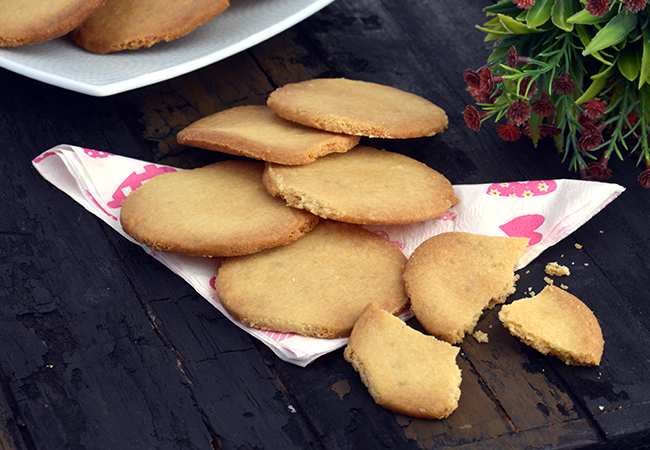
Snacks and eats in those days were all homemade. Given the average size of a middle-class family — give or take a few relatives who lived with them either permanently or on rotating basis – the quantities had to be substantial. The usual container for these was the ubiquitous Britannia biscuit tins (sorry, picture below is that of Parle!). Our family was no different. The only difference being that, while other women made fried snacks like murukku, chiwda or shankarpali, mother baked her special biscuits.
Now, to bake a large tin of biscuits, one can imagine how much dough had to be mixed and how long it would take to bake in those tiny trays! But then the women of yore were also gifted with a lot of patience. Mother would finish her work quickly on the designated day she had to bake the biscuits, and skip her lunch, making do with an extra cup of coffee, claiming that lunch made her feel drowsy and lethargic. My elder sisters helped to roll and cut the dough, but the baking was done by Mother.
Her recipe included maida, milk, vegetable shortening (Dalda), ammonia, vanilla essence, and powdered sugar. Ammonia, you ask? Oh yes, in olden days this was commonly used in biscuits and cookies in place of baking powder. It was called baker’s ammonia (ammonium carbonate) and could be bought at the chemists.
As awareness about the harmful effects of the maida and other ingredients increased, she substituted whole wheat flour for maida, and baking powder for ammonia. Likewise, she discarded shortening and replaced it with homemade white butter creamed with sugar. The biscuits were slightly harder, but the taste was even better than when made with maida. I wish I had taken the recipe for this awesome biscuit from mother. Alas, it is too late now! So, while I know the ingredients, I am not able to share the quantities or the recipe.
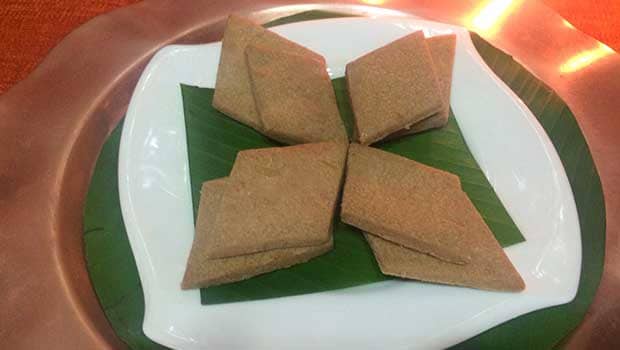
The biscuits were not cut into fancy shapes but were cut into diamond shapes — sort of like large shankarpalis — out of large thick chapatis. This method used up the entire chapati in one go unlike when shapes are cut out of the dough, which meant rolling the leftover dough over and over. It saved time and effort. She did make round ones, when the family had shrunk and the quantities to be made were less, but it was the square ones that I remember most fondly.
She was at the task for the better part of the day, as the baking contraption could only accommodate a handful of biscuits at a time and the quantity needed to be made was huge. Slowly the large tins would begin filling up and by evening the whole house would be fragrant with baking smells that lingered for hours alerting neighbours about a bonanza to come! We sorted the good ones and stored them separately to serve visitors or share with relatives and friends, with the family getting to eat the uneven smaller bits cut from the edges. The biscuits were small enough for us to each get a large handful every day — once a day!
They tasted great, were light, crisp and a beautiful brown. I call them biscuits because they were crisp, flat, and smooth in texture as compared to your ordinary cookies. For weeks after, we would never have a cup of tea without a handful of the crunchy brown squares, which we dunked into it. They were so light they soaked up the liquid and melted in the mouth! I feel that the closest in taste to mother’s biscuits is the digestive biscuits we get today. When I feel particularly nostalgic for mother’s biscuits, I buy a packet of those!
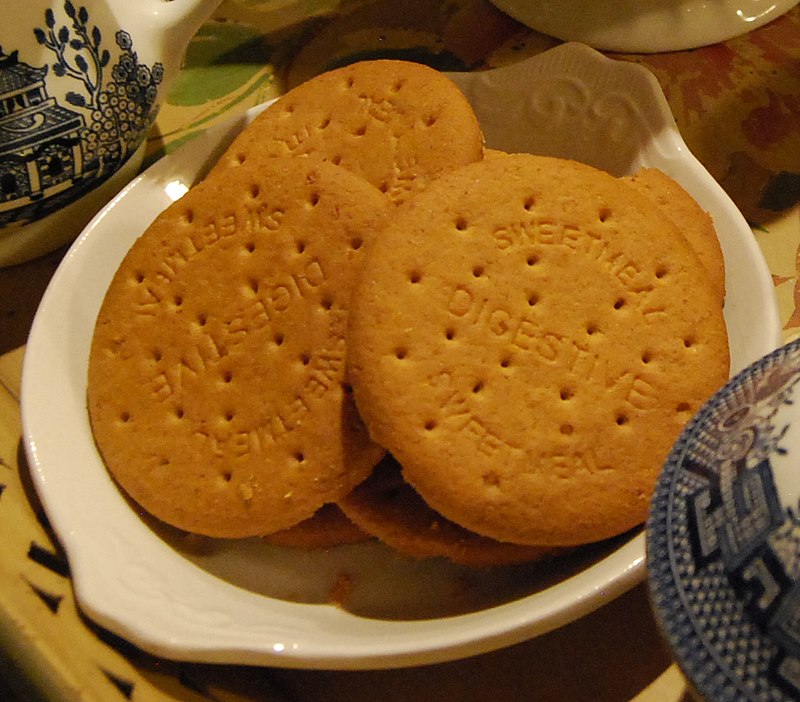
I wonder if the likes of my mother’s biscuit tin are still available in the market.
Women of those days were real wizards in the kitchen. They could turn out finger-licking dishes and meals with the most rudimentary equipment, the minimum of ingredients, improvising and innovating as they went along. What is more, they didn’t make small batches of anything. With large families and sometimes joint and extended families, everything had to be in large quantities. The standard containers for any namkeen for instance were the Britannia biscuit tins sourced from the local bania.
During the days of the 1965 war with Pakistan we lived in Nagpur. Wartime rationing ensured that each family (we were six of us), we got just 2 kgs of rice and even less of sugar. The imported red wheat that made really tough chapatis was in plenty, as were jowar, and other millets. Though these items were available in the open market, they were beyond our reach. As both rice and sugar were central to all the goodies that were part of festival bhog, it called for some innovation, and mother rose admirably to the occasion.
Today when millets are all the rage, with various millets replacing rice and wheat both as staples and in various dishes, I am reminded of how Mother deftly turned jowar into ‘rice’ and made all the conventional savouries like murukku with it – more than half a century ago. The taste varied slightly, but to our tastebuds, it tasted heavenly.
She steamed the jowar flour and mixed it with the other ingredients the recipe called for, and made the whole range of savoury items. They didn’t taste like the original, but were very tasty, with a unique flavour to them. Her recipes were sought after by other women in her social circle and earned her culinary fame!
We had nutritious thalipeeth with lots of vegetables made from mixed millet flours several times a week too. She also substituted jaggery for sugar in almost all sweets that it was possible to, and turned to jaggery based sweets when it was not. As I look at all the innovative recipes of millets and sugar substitutes on the web, I am amazed at how far ahead of their times were mother and many of her generation!
Images: Homepage and top: http://www.tarladalal.com, Middle: http://www.ndtv.com/ Bottom: https://en.wikipedia.org/





 The Cybernag
A great read…brings much nostalgia. And hunger!!!
LikeLike
More a craving for some noruks, I guess, than hunger 😀
LikeLiked by 1 person
Aah! What a tasteful tribute. The local bakers are all gone now. Those were the days of limited desires and enormous care.
LikeLike
Local bakers are best avoided in today’s atmosphere of unhygenic conditions under which they operate, leading to diseases. And many of our mothers’ and grandmothers’ recipes are lost forever, more is the pity.
LikeLiked by 1 person