
A long time ago, almost in another lifetime, I used to freelance for newspapers and magazines. Here, I am sharing one of the articles which was published in the Sunday Reading section of The Tribune, Chandigarh on February 28, 1999 under my original name, Thangamani. It is a bit long, but is a well-researched piece on the felicity with which women instantly bond with each other.
*******
The young couple in the train was travelling with a small baby, not more than a few months old. Sitting across them was a lady in her sixties, who, after settling her baggage, closed her eyes for a nap. There was quiet in the compartment for a while. Suddenly the silence was pierced by the shrill wailing of the baby.
Soon the baby was bawling uncontrollably. The obviously inexperienced couple tried everything to quieten him, and failed. The lady was wakened too. She immediately took the infant in her arms, and her experienced hands slowly massaged the tiny back and abdomen while she talked softly to him. The bawling gradually reduced to a whimper and eventually stopped. The young woman was so relieved that she began thanking her in broken Hindi. Soon the two were talking about babies, and various other subjects, the language barrier notwithstanding, making themselves understood by gestures when they couldn’t find the words, as if they had known each other all their lives.
A man may help a fellow male in times of distress, but it is doubtful that it would go beyond that. Helping a fellow human being is a human trait, but it usually stops at that for men, instead of leading to the closeness that women often share after a similar experience.
Says Anuradha Bhandari, Professor of Psychology in the Panjab University, “The very temperament of a woman makes bonding easy. A woman is socially oriented and more readily expresses social behaviour. Social conditioning and to some extent the genetic factor are also responsible for making women emotionally more responsive to each other. For instance, women are conditioned to share, and give,” she says. Also, their cares, constraints and concerns are universal. The emotional affinity they share with each other transcends geographical, language, cultural and age barriers.

Take for instance their concerns. No matter how high in the official ladder a woman has climbed, no matter how successful a career she has carved for herself, she is first a mother. The overwhelming maternal instinct is in constant conflict with her other concerns. Her various roles tear her apart, making her a bundle of nerves with feelings of inadequacy and guilt. And this is true of women the world over and it is but natural that they instantly begin comparing notes when any two of them get talking. It would not be an exaggeration to say that just as when two strangers both men meet, they might either discuss the weather or talk politics, when two women meet, they begin on their favourite topic of family, especially children.
One of the most common topics of conversation between women . So much so that even the traditional hostility between the mother-in-law and daughter-in-law takes a back seat the moment a child is born, the girl instinctively turning to the older woman for guidance and support. This also brings about a new kind of bonding between the two at times.
Another reason for their bonding is that unlike men, who retreat into silence, women have an overwhelming need to articulate their feelings. According to studies conducted on the behavioural patterns of men and women, on an average, a man speaks about 2000 words in a day with the corresponding figure for women being 7000 words! It is therefore natural that women have more need to talk to exhaust their quota for the day!
A woman talks, no matter what her mental state is whether she is happy, upset, or angry. “Oh, I’m so happy/angry/upset!” can be commonly heard from women, never from a man. And when a woman is upset, she needs a sympathetic listener, one who gives support by just being there. In such a dialogue, the predominant feeling is one of empathy. The listener can often empathise completely with her either because she herself has undergone some similar experience or seen someone close undergo it. As for the speaker, just the knowledge that she is not alone in her predicament makes her feel secure.
Curiously, when women share their innermost feelings with other women they trust, they have no fears that their secrets would be betrayed or scorned at. Thus women instinctively form a silent support group, whether it is in the joint family or in the neighbourhood or even in the workplace. This is particularly true in cases of harassment. When a woman finds the courage to talk about it to neighbours or friends, even if her parents’ family is indifferent, as it so often happens, it can check the perpetrators. The very knowledge that others are aware of their victim’s predicament can serve as a deterrent to the perpetrators of the crime.
“Whether she is talking about her problems or others’ problems, talking is a natural and healthy Venusian reaction to stress,” writes John Gray, in his best seller Men are from Mars, Women are from Venus. Except in rare cases, where a woman may have malicious intentions, normally women get genuinely interested in another’s problems and try to support her.
Still, compassion and care need not always be a gender thing, as there are exceptions to the rule. It would be more appropriate to say that it is a temperamental trait. There are men who are capable of expressing sensitivity, warmth and caring. But these are men who are different temperamentally too. For instance, their hobbies and preoccupation may be more gentle, artistic, or poetic. “They are distinct from the normal aggressive male. Such men are able to have a closer bond with their children too,” avers Bhandari.
The need of women to share, leads people to mistakenly call women as being talkative, gossips and nosy.
But did you know that even gossip is being viewed in a new light?
According to some studies, gossip is a way of socialising, and curiously, even bonding. When a group of people talk about someone who is absent, those present feel a sense of belonging. Here, one is not talking about malicious gossip, as opposed to idle gossip. The latter is harmless while the former is destructive.
Does that mean that men never gossip? Nothing could be further from the truth. It is unfair to brand women alone as frightful gossips,” says an angry Sarita. “Have you heard men talk when in a group? They would put any so-called gossipy woman to shame with their conversation which can sometimes be unbelievably catty.” How then do they get away with it, while women are branded gossips?
Bhandari explains it thus: “It is not that men don’t gossip. But for them it is just fun, a way of passing the time which they forget the moment they are out of the group. But women tend to dwell on it, raking it up long after they have heard a bit of news. This is perhaps what gives them their notoriety as gossips.”
It is not just because women are talkative or nosy that they strike up conversations even with complete strangers. It is because of their very nature, which makes them get involved. Also, they are naturally good at making small talk. “Women never stand aloof even in a queue. They make acquaintances easily and chat as if with long lost friends. And the funny part is that sometimes they don’t even ask each other’s names!” marvels Asha, a mother of two. Agrees Veena. “I can open up to complete strangers, often talking about my deepest secrets. That’s because I feel safe in the knowledge that I may never meet the person again and so there is no danger of the information going beyond the person I speak to.”
It is great source of solace, even cathartic, for women to talk about their innermost fears and feelings. Explaining the therapeutic value of talking among women, Gray explains, “Women’s talk is very open and intimate, almost like the dialogue between therapist and patient.” Women often call each other up just to pour out their tales of woe. They feel better after a while, even when the response at the other end has just been clucking noises and sympathetic sounds of agreement.
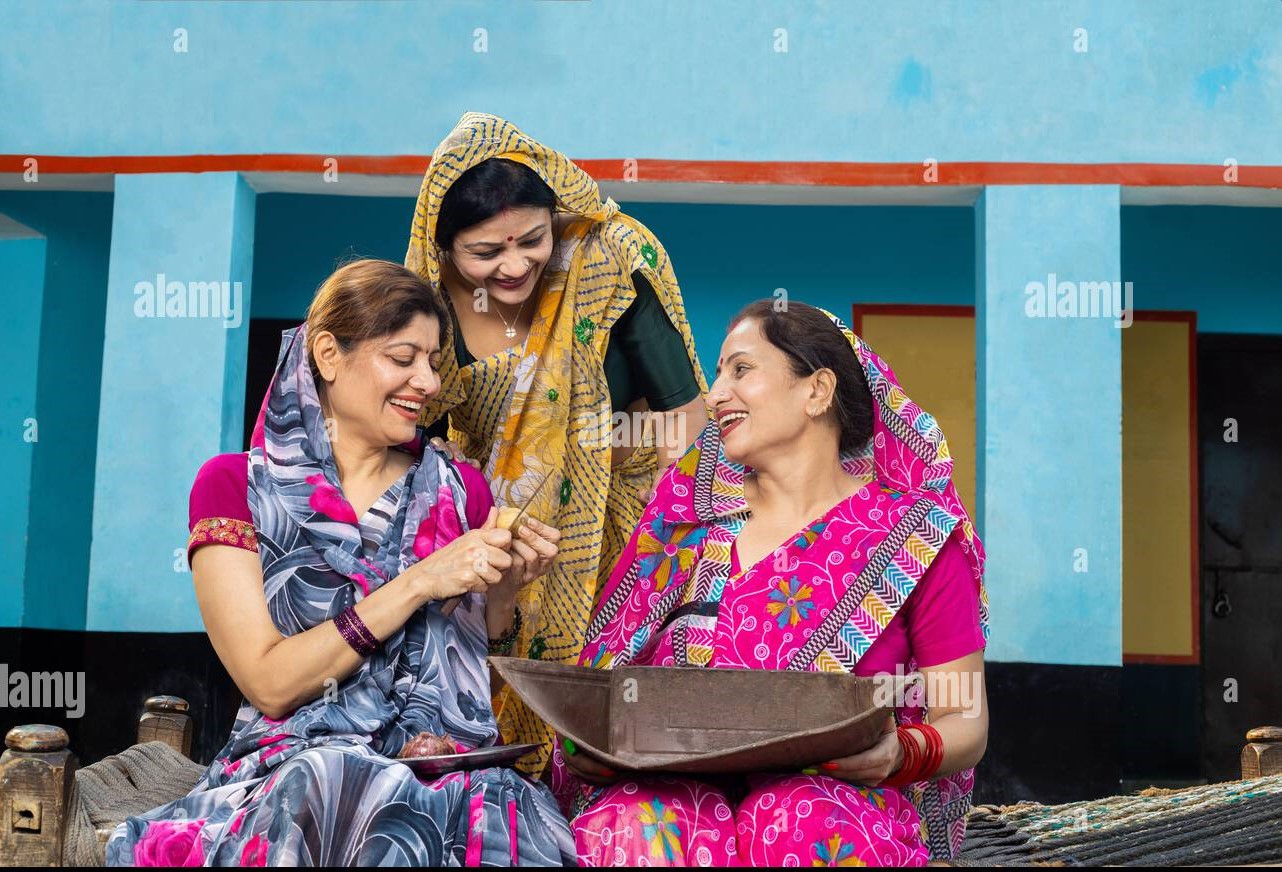
For women, making friends also comes easy. A middle-aged woman can make a new friend and get close to her. One reason for this is perhaps, most women move after their marriage, making it difficult to continue childhood friendships. They have to find friends as they go along in life. I have seen several women of varying ages being close friends. I have made several close friends in my 30s and 40s.
By comparison, grown men may find companionship with another man in their adulthood, but these may not be close friendships. Even where they share a close companionship it would most likely be related to their hobbies, activities, or social groups.
Office friendships, not uncommon amongst women can therefore definitely be ruled out among men. Male employees generally tend to talk about impersonal things like politics, sales targets and achievements. There is an underlying competitiveness even in their off-work talk. It is as if they cannot afford to let their guard down in front of their colleagues, whereas the conversation among women is warm and personal.
Even hierarchy tends to blur at times, where women are concerned. A woman boss and her junior staff may exchange domestic problems off-hours but the same is very rare among male bosses and their subordinates. This is because the women talk only as two women sharing their concerns. “My boss often asks for my advice in dealing with her teenage daughter, since I have grown-up children at home,” says Kanta. Gray describes this sharing as a Venusian trait, where women consider it a privilege to be asked for help while the one asking for it feels cherished.
All this makes women warm and friendly. So, is the cliche that women are their own worst enemies completely wrong? Bhandari maintains that a woman can rarely be really vindictive or vengeful. It is true that a woman may vocalise her bitterness, her anger and resentment and swear vengeance on those that have hurt or betrayed her. “But when the time comes for her to carry out her threat, she tends to back down. Her compassion usually wins over her vindictiveness,” she says.
It is almost as if she has spent her anger verbalising it and doesn’t need to carry it out physically. This is in contrast to the man, who silently and systematically plots the downfall of his detractors. So how can one say that women are women’s own worst enemies? At best it can be an exception to the rule. Study after study has established that women are more empathetic as compared to their male counterparts. One vast study conducted by the University of Haifa, involving over 300,000 respondents from 57 countries across the globe, reiterates this fact.
Hence, generalisations about women being catty, gossipy, and vindictive notwithstanding, it is the female of the human species that is capable of forming bonds with others of her kind easily, and with compassion and affection.
Pics: Homepage and bottom : https://www.alamy.com Top: https://www.mumways.com/





 The Cybernag