
‘Papad belna’ (rolling papad) is an idiom in Hindi which means undergoing great hardship while trying to achieve something. It belongs to the era when this activity helped many a struggling family to survive. But it was also an annual community activity, where extended family members or women of the neighbourhood came together to roll out hundreds of papads for their families or a function, even a wedding in someone’s family. It was full of camaraderie and warmth as the women chatted, even while their hands swiftly rolled out the round condiment by the dozens.
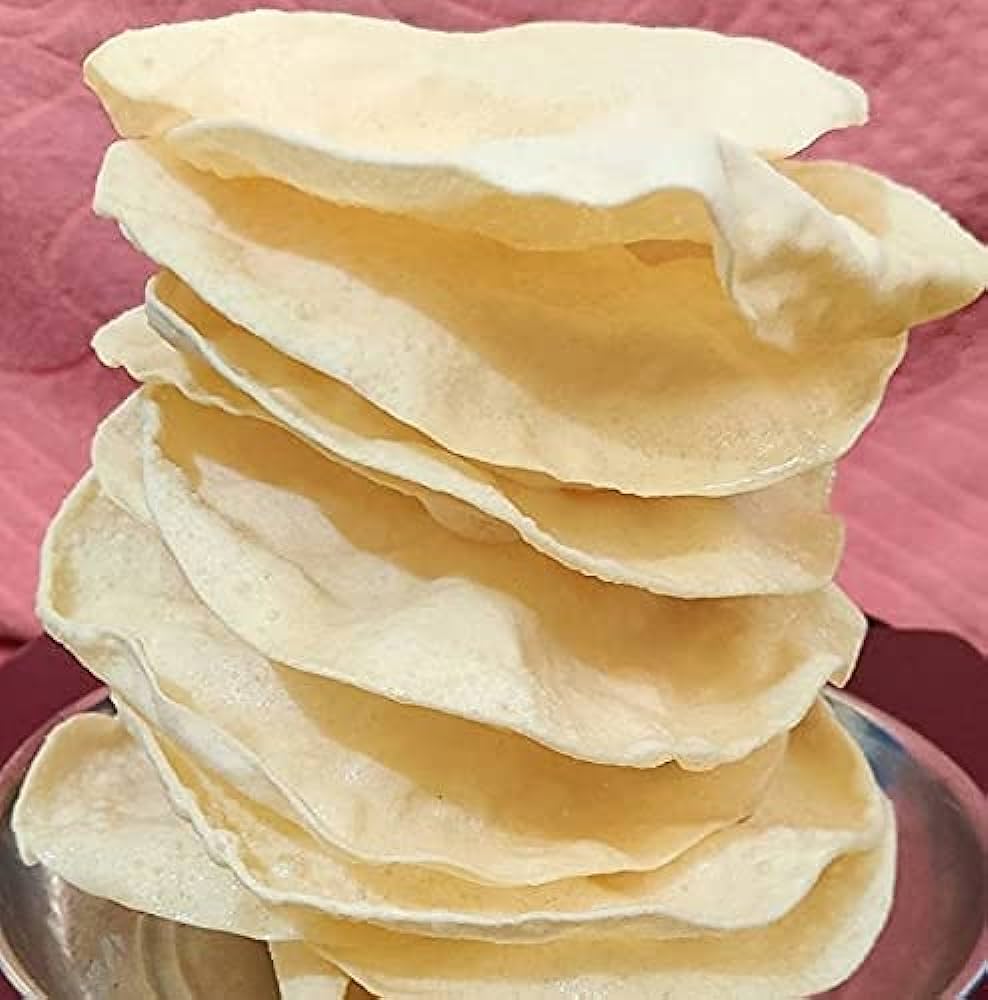
It was perhaps this singular aspect that prompted a small group of women headed by Jaswantiben Popat to capitalize on, setting up Lijjat Papad, the first co-operative in the trade during the early1960s, thus starting a ‘papad revolution’ in the country. That tiny enterprise which started with a capital of Rs.80 is today a Rs.1600 crore international brand, that supplies a range of papads to a worldwide market. Jaswantiben was honoured with a Padma Shri in 2021, at the age of 91 – a belated but well-deserved honour. She passed away in September 2023.

Papad is that ubiquitous condiment which is eaten in every part of the country. It can be an accompaniment to a regular meal and often substituted for a subzi. Even in earlier days many families outsourced papad-making, giving employment to many poor families. Also, there are cities and towns that are famous as ‘papad centres’. Two come to mind instantly: Kallidaikurichi in Tamil Nadu, and Bikaner in Rajasthan. The former has any number of units producing appalam varieties and has become a hallmark of quality for different varieties.
Coming back to the post, every middle-class home in those days – more than half a century ago — used to have large Britannia biscuit tins filled with papads and crispies, huge ceramic jars full of spicy pickles, to last a year. Vegetables like brinjal, bhindi, cluster beans and chillies were soaked in brine or spiced buttermilk and sun-dried in large quantities. These condiments and dried vegetables came handy when there was no fresh vegetable available. These used to be a family activity, with the children forming the major ‘workforce’, running errands and guarding the drying condiments from birds, among other things. We didn’t mind the guard duty at all, especially when it was papads and crispies, as we got to eat the spicy batter/dough in return for our efforts! The dal vadis and rice/sabudana crispies were the tastiest of the lot. It was most tempting to pop a few while they were drying, but this was dicey as we each kept a watch on others to prevent filching! Since these activities were done during the summer holidays, they added to the fun.
Back then, many families made their own papads when there was a function or wedding in the family too. Everyone pitched in to help. All one had to do was to send word to neighbours that there would be papad-making in such and such family for an upcoming function, and women would come with their own rolling board and belans to lend a hand, knowing fully well that they would get help when it was their turn. Such activities fostered a great community spirit in daily life. Note that while womenfolk were invited to help, kids from other houses were not, for obvious reasons!

Just as kids from other houses were not invited for this activity, so were men not invited, but menfolk of the concerned family lent a hand. I remember father joining enthusiastically in the proceedings, as he loved the dough, whether of urad dal or rice. While rolling them out, he would surreptitiously pop a few dough balls into his mouth, passing on some to us to stop us tattling. As if Mother wasn’t aware of the pilferage!
It was a labour-intensive job. The urad dal had to sundried and ground into a fine flour first. We had a hand-cranked grinder that did the job perfectly. Father was the one who did this chore with mother adjusting the tension to get the right fineness needed for the papad dough. It was sieved and then kneaded with spices, before an experienced woman pounded the life out of the dough to give it elasticity!
After that, it was rolled into a long cylinder and tiny balls the size of a marble would be pinched out of it. It would be like an assembly line with the papad passing through the hands of the least experienced through the most experienced, increasing a centimeter or so in diameter as it passed up the line. When it finally reached either Mother or another experienced woman, she would correct the shape and roll it out into the final papad – every one of them of the same circumference and thickness.
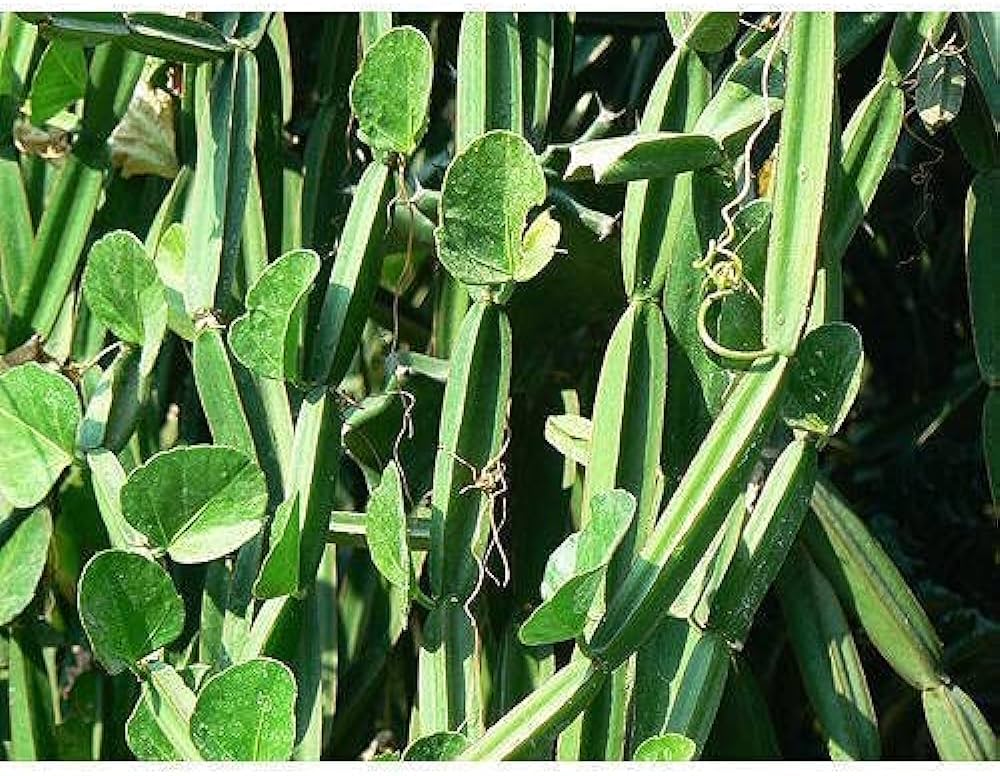
Coming to the two strange ingredients that I have mentioned in the title of this post, I call them strange because one of them was a herb that caused severe itching in the throat if eaten raw, and the other was used as a purgative, at least in my childhood! These were used by many Tamilian families back in those days. I am not sure they are still used or if the makers have switched over to other substitutes.
The first one was a stick-like herb called Pirandai (Hardjod in Hindi). It is called variously as veldt grape, adamant creeper and devil’s backbone in English. It grows wild on fences and is largely ignored by many people who are not aware of its nutrient value and uses. Animals avoid it too as it causes uncomfortable itching in the throat when eaten raw. It is made into a tangy and tasty chutney with dals and tamarind to take away the itching it causes.
Now why would our ancestors add such an unlikely and itchy ingredient to the papad dough? Urad dal has the tendency to aggravate joint problems, and one of the many curative properties of pirandai/hardjod is alleviating joint pains and aiding in digestion. Apparently, it is also a substitute for baking soda and papad khar that are normally used to make papad crisp. Why use stuff that has no health benefits when one can use a healthier substitute?
The other was castor oil which was used as a leavening agent for the urad papad. It was slathered on the dough as it was pounded and to roll it out into balls. I used to wonder why they had to use a purgative, when perfectly flavoursome oils like groundnut and til oil were available. Turns out that castor oil apart from acting as a bowel cleanser, is also effective in treating inflammatory disorders like arthritis. Also, it inhibits the growth of mould, thus helping to extend the shelf life of the papads. Now you know why homemade papads never get mould.
The best thing was that neither the pirandai caused any itch, nor the castor oil caused our bowels to run. I guess the trick lay in adding the right amounts of the two ingredients.
And that brings to mind an incident relating to pirandai. One year during the papad making event, a little goat gobbled up the vegetable waste from our house which had some pirandai bits. Soon the herb did its work, and the kid began scratching its tongue on a rock, bleating piteously. We watched anxiously lest something happened to it and the owner descended on us, but fortunately someone got the bright idea of giving it some water. Soon it went on its way, and we heaved a sigh of relief!

Such wonderful community activities are getting rarer by the day in cities and towns, though one can still see them in small towns and rural areas. After all, families are much smaller and it is easier to get a variety of papads and crispies from the shops. Which is why the Padma Award given to the founder of Lijjat is a great thing, especially since the co-operative still does not use any machinery, relying on the physical labour of its women members, who work in groups, contributing in a big way towards Women Empowerment even while fostering a healthy community spirit among its members.
Images: Top- https://www.reddit.com/ Papad drying in the sun : https://www.reddit.com/
Papad rolling: https://www.hindustantimes.com/ Homepage and pirandai: https://www.amazon.in/




 The Cybernag